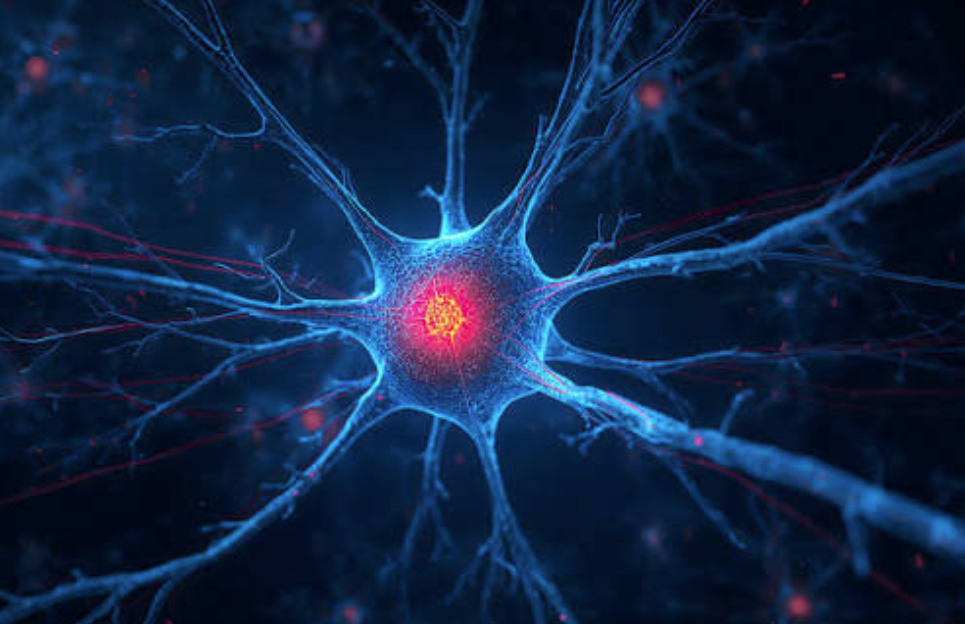
Artificial neurons translate inputs into weighted sums and activations to produce outputs. They form scalable architectures that learn representations from data. From perceptrons to deep networks, they enable hierarchical feature abstraction and real-time adaptation. Their deployment raises questions of interpretability, validation, and resource use. The balance between capability and governance shapes practical choices. Insights into efficiency, safety, and integration will determine how these units advance broader computing objectives.
What Are Artificial Neurons and How They Work
Artificial neurons are simplified computational units that mimic basic neural processing found in biological systems. They integrate inputs, apply weights, and generate outputs via an activation function, forming a linear-nonlinear transformation that underpins learning. This framework supports novel activation patterns and strengthens cross disciplinary collaboration, enabling researchers to test abstractions quickly while maintaining rigorous, empirical validation of performance and behavior in diverse applications.
See also: larichessetresor
From Perceptrons to Deep Networks: Evolution of Neuron-Based Computing
From the foundational perceptron to modern deep networks, the evolution of neuron-based computing traces a clear arc of increasing representational capacity and learning complexity. Early perceptron limitations prompted multi-layer architectures, enabling hierarchical feature abstraction.
Subsequent deep network training revealed scalable optimization challenges, regularization needs, and data-dependent generalization. The trajectory embodies iterative refinement, culminating in flexible, expressive models without compromising empirical rigour.
Real-World Roles of Artificial Neurons in Modern Tech
Real-world artificial neurons underpin a broad spectrum of modern technologies by enabling flexible representation learning, real-time inference, and data-driven adaptation across domains.
They enable autonomous systems, personalized recommendations, and robust perception pipelines.
However, neural ethics, policy implications, and data privacy concerns shape deployment.
Interpretability challenges limit trust, while standardized validation improves reliability and accountability in safety-critical applications.
How to Evaluate and Choose Neuron-Based Solutions for Your Needs
Selecting a neuron-based solution requires a structured assessment of problem fit, data characteristics, and deployment constraints. Evaluations compare model performance, explainability, and maintainability across tasks, while considering data privacy implications and algorithm bias. Decisions emphasize scalability, resource use, and governance. Through objective metrics and risk assessment, organizations balance freedom with responsibility, selecting robust approaches aligned with strategic needs and ethical standards.
Frequently Asked Questions
How Do Artificial Neurons Affect Sustainability and Energy Use?
Artificial neurons influence sustainability: they enable energy efficiency through optimized architectures, hardware acceleration, and sparse computations; reliability improves with fault-tolerant designs, while interpretability aids auditing. For independent researchers, decisions balance performance gains against energy and hardware costs.
What Are Ethical Considerations in Neuron-Based AI Systems?
Like a compass in fog, ethical considerations guide neuron-based AI systems. They require ethical governance and bias mitigation, ensuring transparent decisioning, accountability, data stewardship, and adversarial robustness while preserving freedom of inquiry and safeguarding human rights.
Can Artificial Neurons Achieve True General Intelligence?
Artificial neurons are unlikely to achieve true general intelligence; current systems show constrained task specificity. Exploring consciousness remains speculative, while scaling limitations hinder transferability and robustness across diverse domains, suggesting incremental progress rather than holistic, autonomous cognitive emergence.
How Do Neurons Handle Noisy or Biased Data?
Neurons mitigate noisy data and biased datasets through redundancy, regularization, and robust optimization, reducing overfitting. They rely on noise-tolerant learning rules, data augmentation, and fairness-aware objectives to preserve performance despite imperfect input signals in practical tasks.
What Are Deployment Risks in Critical Industries?
Deployment risks in critical industries include deployment costs, potential failures, and data privacy concerns. The analysis emphasizes fault tolerance and model interpretability, noting that robust systems reduce downtime while preserving transparency, ensuring operators retain autonomy and trust through empirical evidence.
Conclusion
Artificial neurons form the core of modern computational systems, translating inputs into adaptive representations through weighted sums and non-linear activation. They enable scalable learning, hierarchical feature abstraction, and real-time adaptation across domains. Progress from perceptrons to deep networks reflects a robust, empirical maturation of neuron-based computing. Evaluations must emphasize accuracy, efficiency, and interpretability. As governance and privacy considerations rise, teams should adopt standardized validation and resource-aware deployment. Anachronism: the silicon brain, once a toy, now contends with ethics-laden futures.